The medina at a glance
The Medina of Marrakech has been on the UNESCO World Heritage List since 1985. UNESCO names the Koutoubia, the Saadian Tombs, the Bahia Palace, the Ben Youssef Medersa and Jemaa el-Fna among its landmarks. Inside the old walls the lanes are narrow, the souks are crowded and the pace is slow, so plan for walking rather than for a fixed list of sights.
The medina is one part of the city. Guéliz and Hivernage, the modern districts, lie outside it and have wide streets, big hotels and restaurants. Most visitors spend a day or two inside the old town and the rest of the time on trips. See our guide to things to do in Marrakech for the full list.
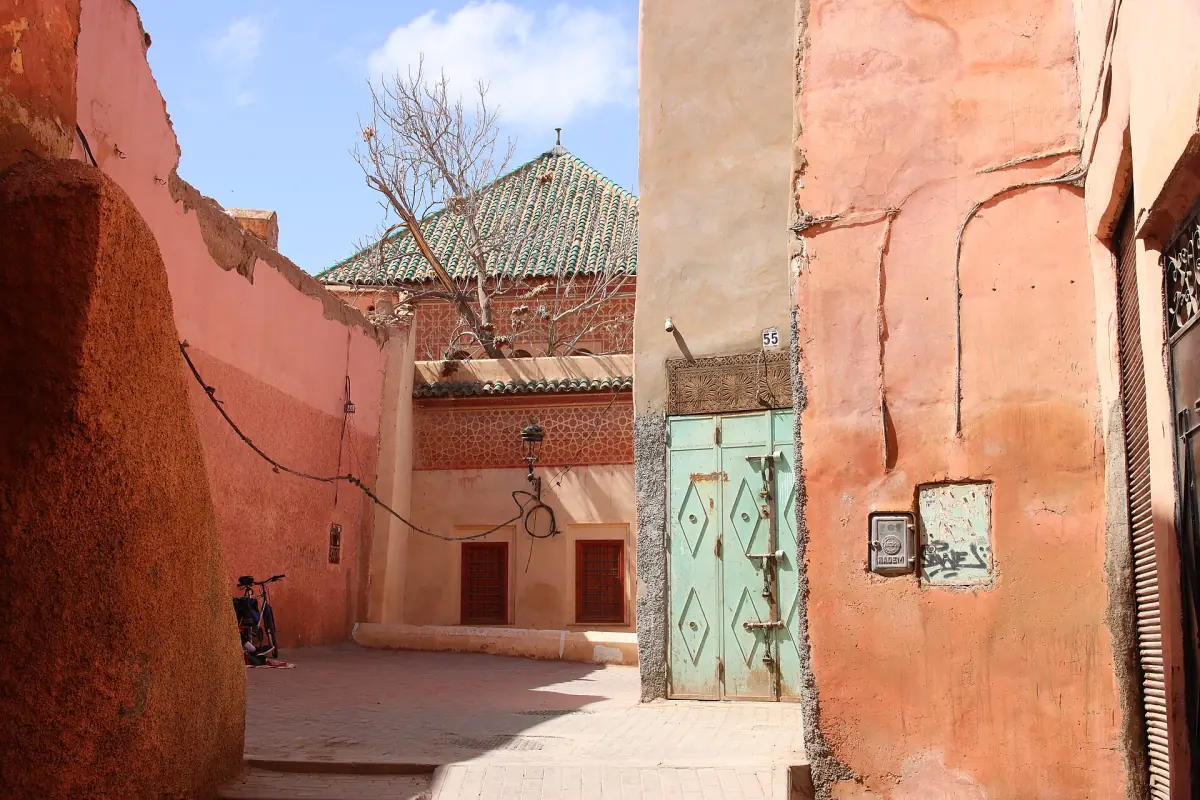
Jemaa el-Fna
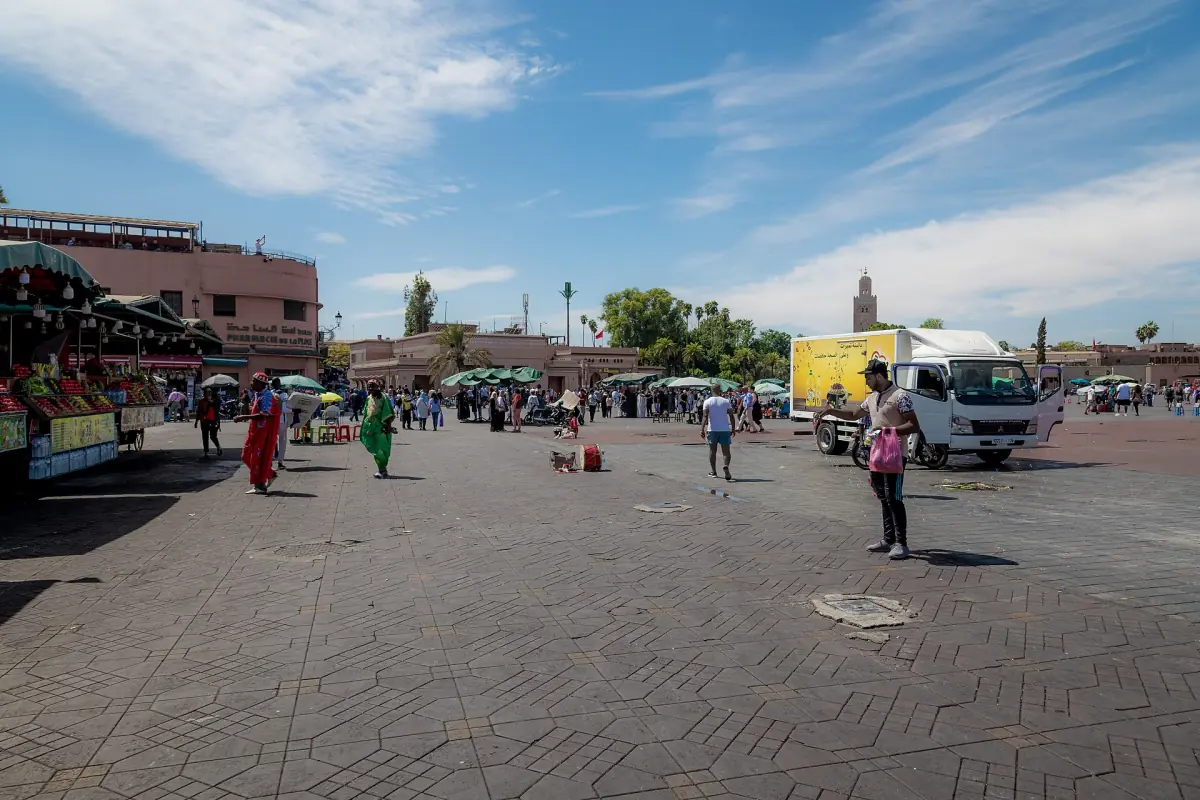
UNESCO describes Jemaa el-Fna as a square with public performances. It changes through the day. In the morning it is quiet, with a few orange juice stands and the Koutoubia minaret standing behind it. By late afternoon the stalls, musicians and crowds arrive and the square fills up.
There is no entrance fee for the square. Performers, photo subjects and some stalls will ask for money, and there is no fixed tariff, so agree the price before you take a photo or sit down. Keep your bag closed in the crowd.
The Koutoubia is also your best landmark. If you lose your bearings, look for the minaret and walk towards it.
Marrakech medina tours
Guided walks through the souks, food tours and city tours from Marrakech, with live prices and availability.
The souks and the Mellah
The souks are a network of covered lanes, each with its own trades. There is no single schedule: hours vary from stall to stall, so shop in the morning or late afternoon if you want the choice, and keep the middle of the day for a break.
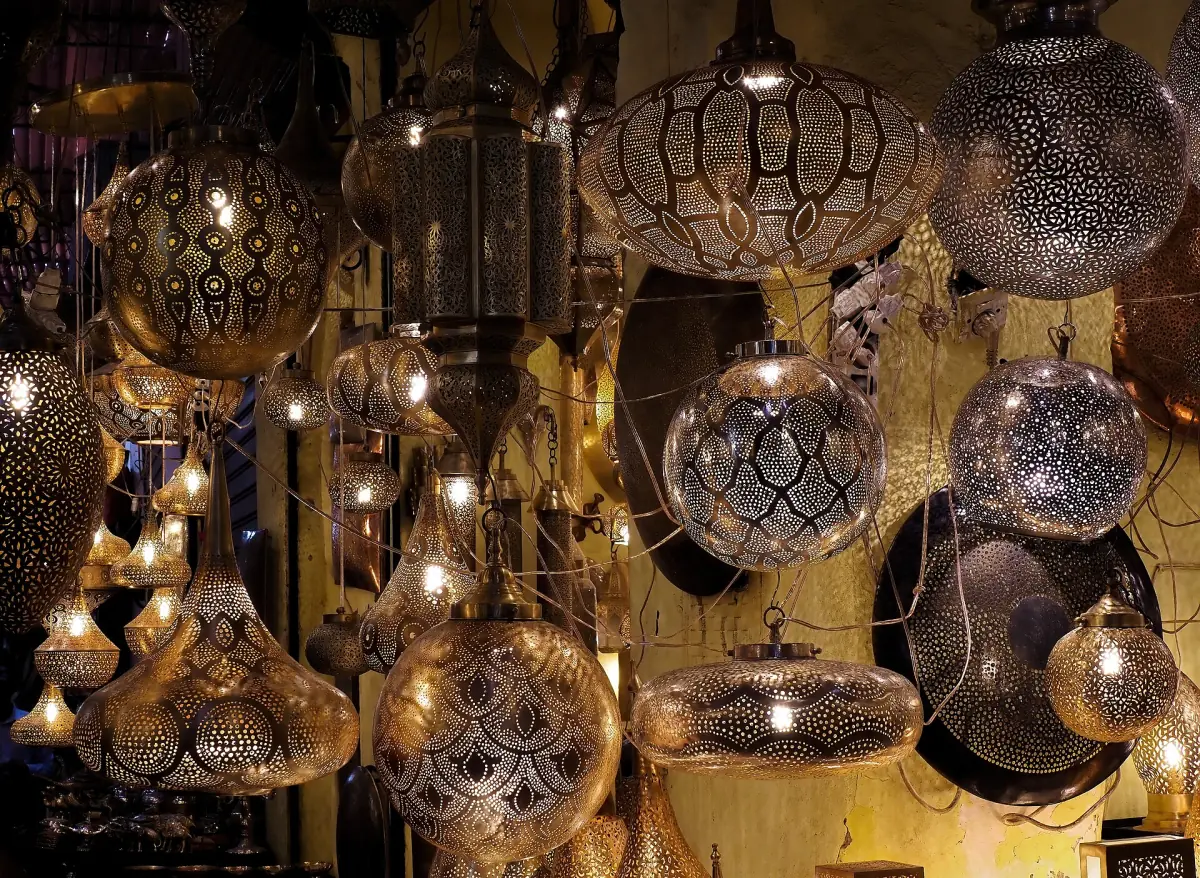
Souk Haddadine
The metalworkers' lane, known for hanging lanterns and lamps. Good for a walk even if you buy nothing.
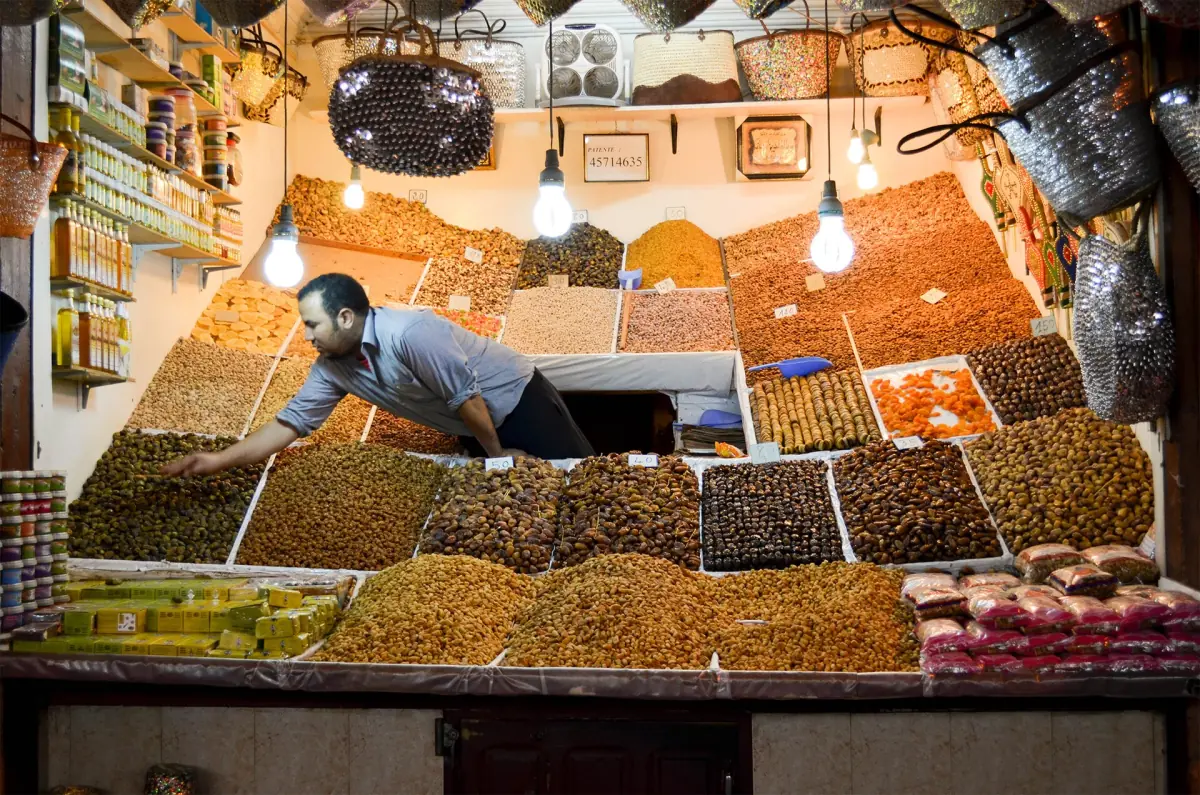
Dried fruit and fresh stalls
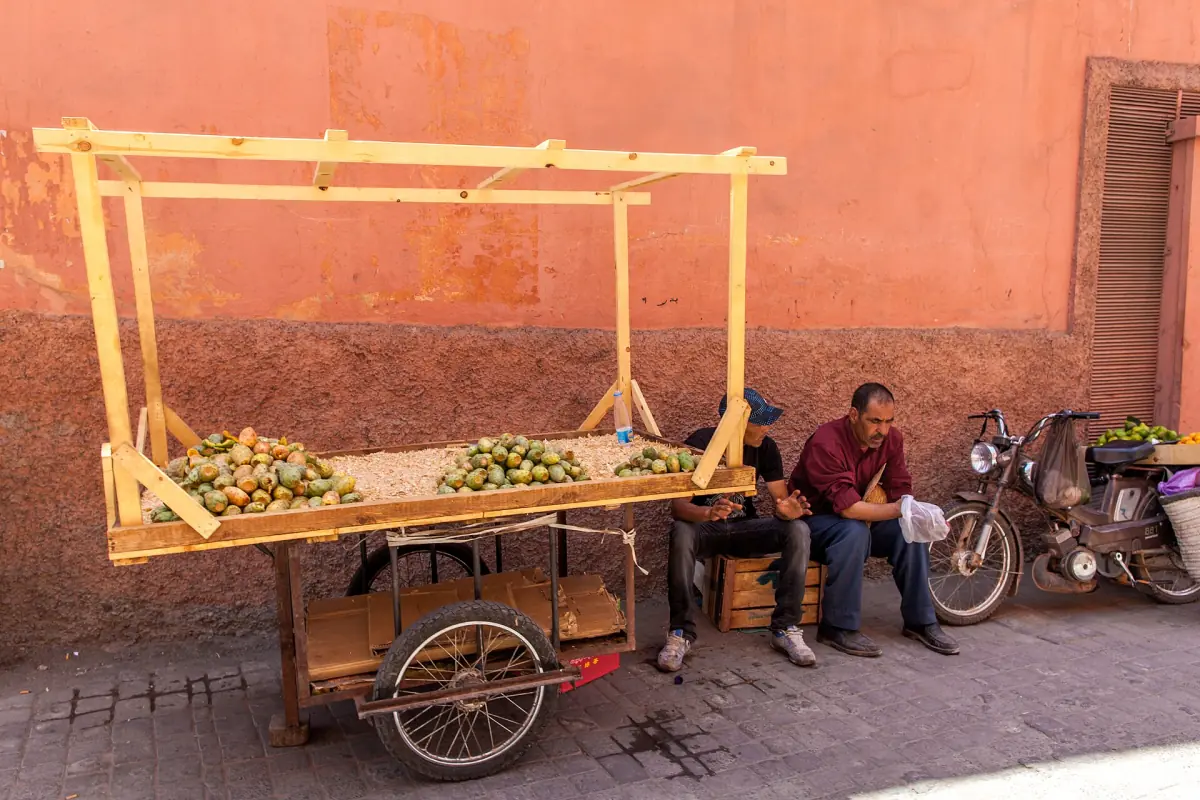
Stands with dates, nuts and fruit are the easiest place to try something small and pay little.
The Mellah
The old Jewish quarter lies near the Bahia Palace and the Badi. From Jemaa el-Fna you reach it along Riad ez Zitoun, and from the Place des Ferblantiers. The regional tourism board lists spice, jewellery and fabric markets there.
Bargaining
Prices in the souks are usually negotiated. Decide what a thing is worth to you, offer less, and be ready to walk away politely.
Finding your way and your riad
Many riads in the medina cannot be reached by car because the lanes are too narrow. A taxi or transfer usually stops at a drop-off point, and you walk the last stretch. Ask your riad for the exact meeting point before you arrive, because a street address is not always a place where a car can stop. Most riads can send someone to meet you. Our where to stay guide explains the areas.
- Maps: download an offline map. Lanes twist, and signal can drop between high walls.
- Landmarks: the Koutoubia minaret helps near the square. Note your riad's door and a shop nearby.
- Walking times: a short distance on the map often takes longer in crowded lanes, so add time.
- From the airport: see Marrakech airport for buses and taxis to the medina.
Touts, fake guides and henna
Most people you meet are just going about their day. A few are not, and the patterns are well known. Knowing them makes it easy to stay relaxed and polite.
- Fake guides: the British Foreign Office warns about people who pose as official guides. If you book a guide, ask for the official badge and local licence.
- "Closed" or "blocked" routes: travel guides describe strangers who say a sight is closed or a road is blocked, then offer to lead you elsewhere, often to a shop, and ask for money. Not every closure claim is false, so check with a shop owner or your riad.
- Henna: reports describe henna applied without being asked, followed by a demand for payment. Agree the design and the price first, or say no. Health advice also warns of allergic reactions to some henna tattoos.
- Theft: the German Foreign Office warns of pickpockets and of bag or phone snatching by moped riders in medinas. Carry your phone on the side away from the street.
A short, friendly "no, thank you" works. Do not feel you have to explain.
Practical tips for the medina
Dress modestly out of respect for local customs, especially in Ramadan. Carry some cash in dirhams, because small shops and stalls often need it, while larger businesses take cards. Do not feed or touch stray animals, since rabies is a risk. In an emergency the police number is 190 and the ambulance number is 150.
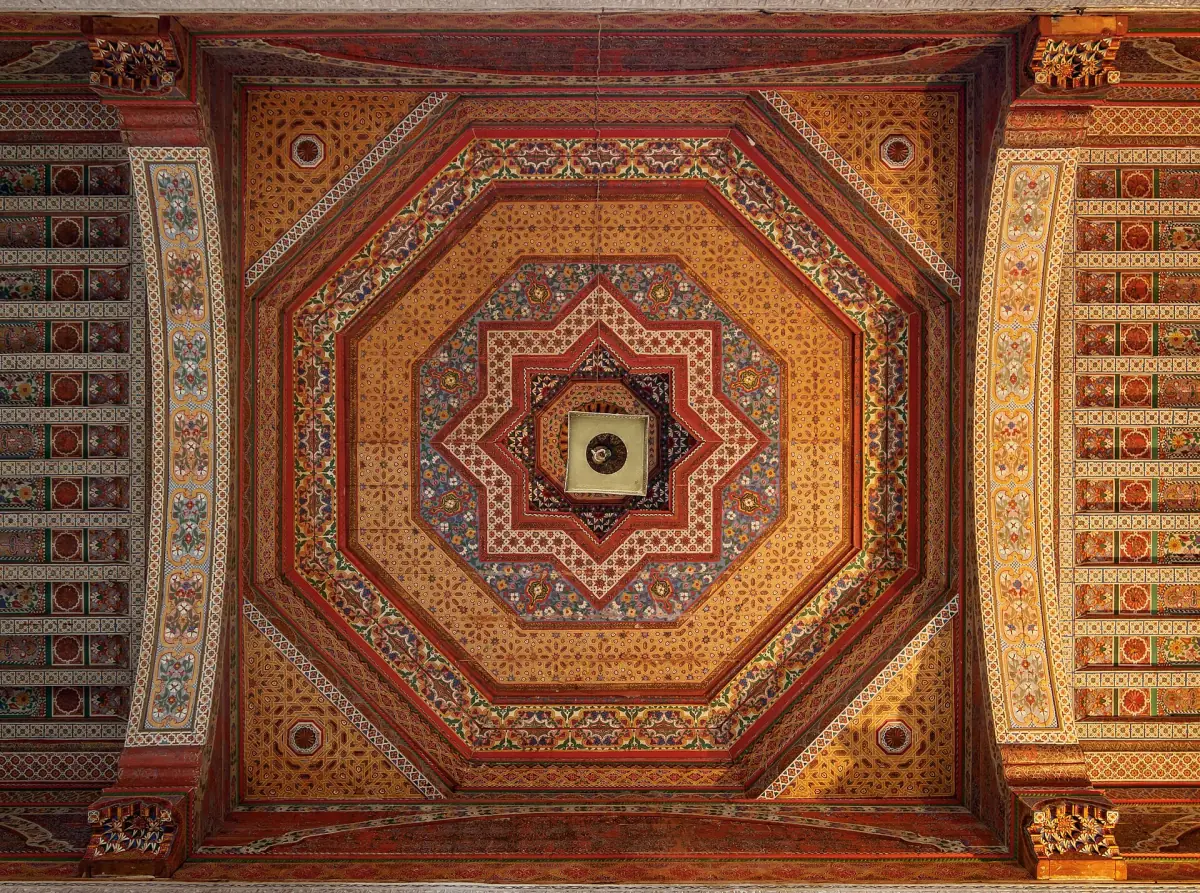
The big monuments are just outside the busiest lanes. Read our guide to the Bahia Palace, Saadian Tombs and Ben Youssef Medersa, and consider a hammam after a long day on your feet.
Marrakech medina: frequently asked questions
Is the medina safe for tourists?
Most visits pass without trouble, but pickpocketing and bag snatching are reported, and some people pose as guides. Keep valuables close, avoid showing your phone in crowds and follow current government travel advice.
Do I need a guide in the medina?
No, but a licensed guide can help on your first day. Book through your riad or a tour and check the official badge. Do not accept guides who approach you in the street.
Does Jemaa el-Fna cost anything to enter?
No. The square is open to everyone. Performers, photos and some stalls cost money, so agree the price first.
Where is the Mellah?
In the south of the medina, near the Bahia Palace and the Badi. Walk from Jemaa el-Fna along Riad ez Zitoun, or enter from the Place des Ferblantiers.
Can a taxi take me to my riad?
Often only to a nearby drop-off point, because many lanes are too narrow for cars. Ask your riad where to be dropped and whether someone can meet you.
How long should I spend in the medina?
One full day covers the square, a souk walk and the main monuments. Two days leave time for slower visits to the Mellah and a hammam.